What Does Sitting Too Much Do to Your Heart, Blood Vessels and Fitness?
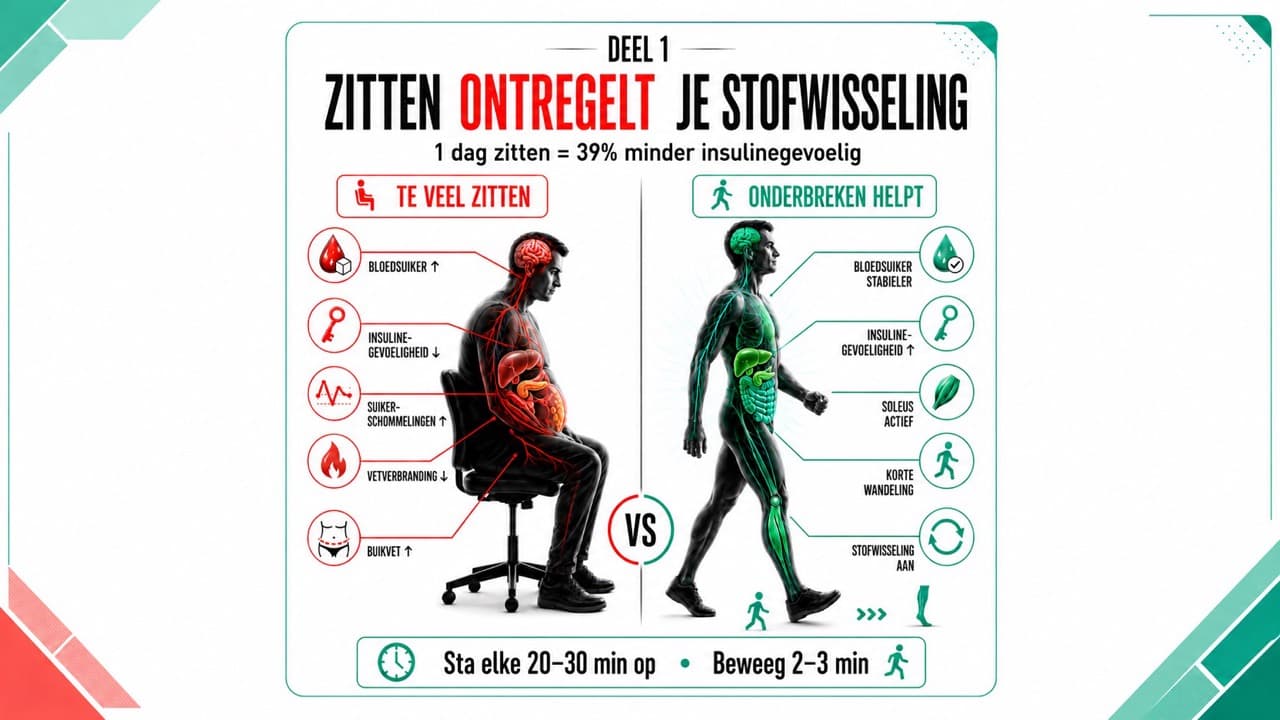
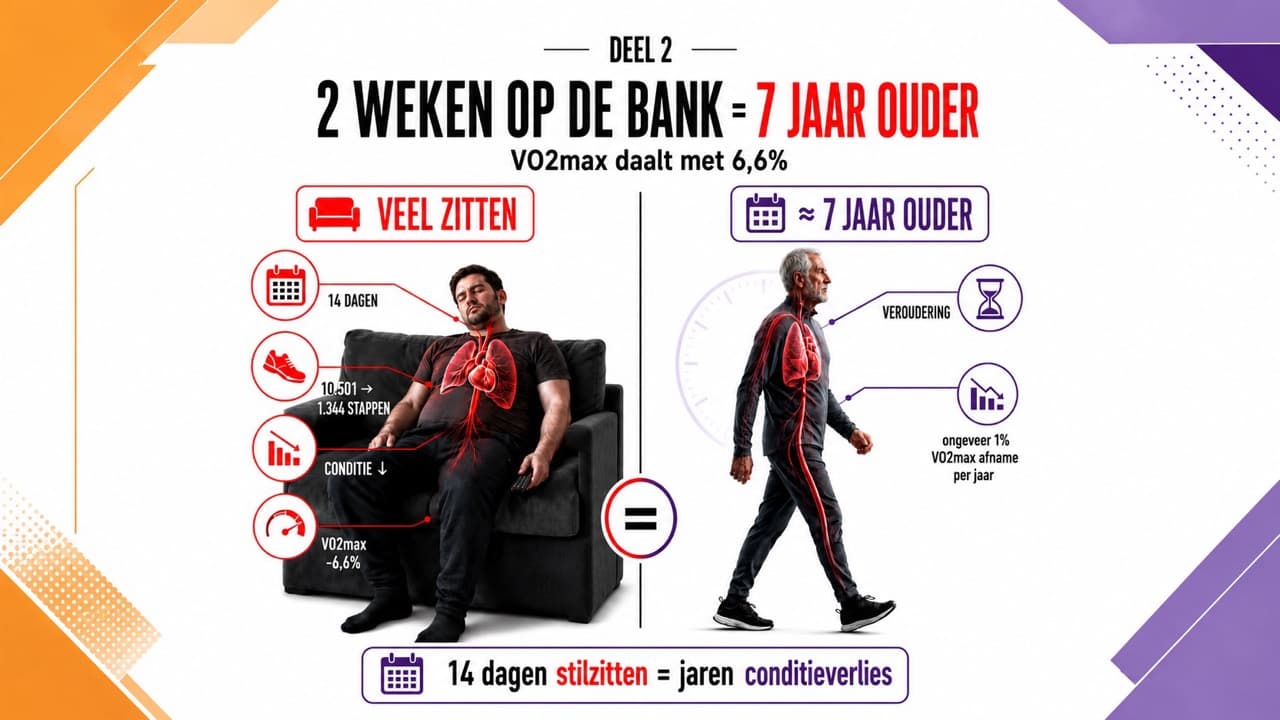
Two weeks of sitting a lot reduced participants' fitness by 6.6 percent. Normal aging costs around 10 percent per decade. Two weeks of sitting too much therefore does to your fitness what approximately seven years of aging does. And the damage to your blood vessels begins after just 30 minutes of sitting.
Blood flow in your legs drops after just half an hour
When you sit, you create a 90-degree angle at your hips and knees. This causes your arteries to kink slightly, like a garden hose you fold in half. The result: blood flow in your legs decreases measurably after just 30 minutes of uninterrupted sitting. At the same time, the shear force of blood against the vessel wall drops. That shear force is normally protective, because it keeps the inner lining of your blood vessels healthy and flexible.
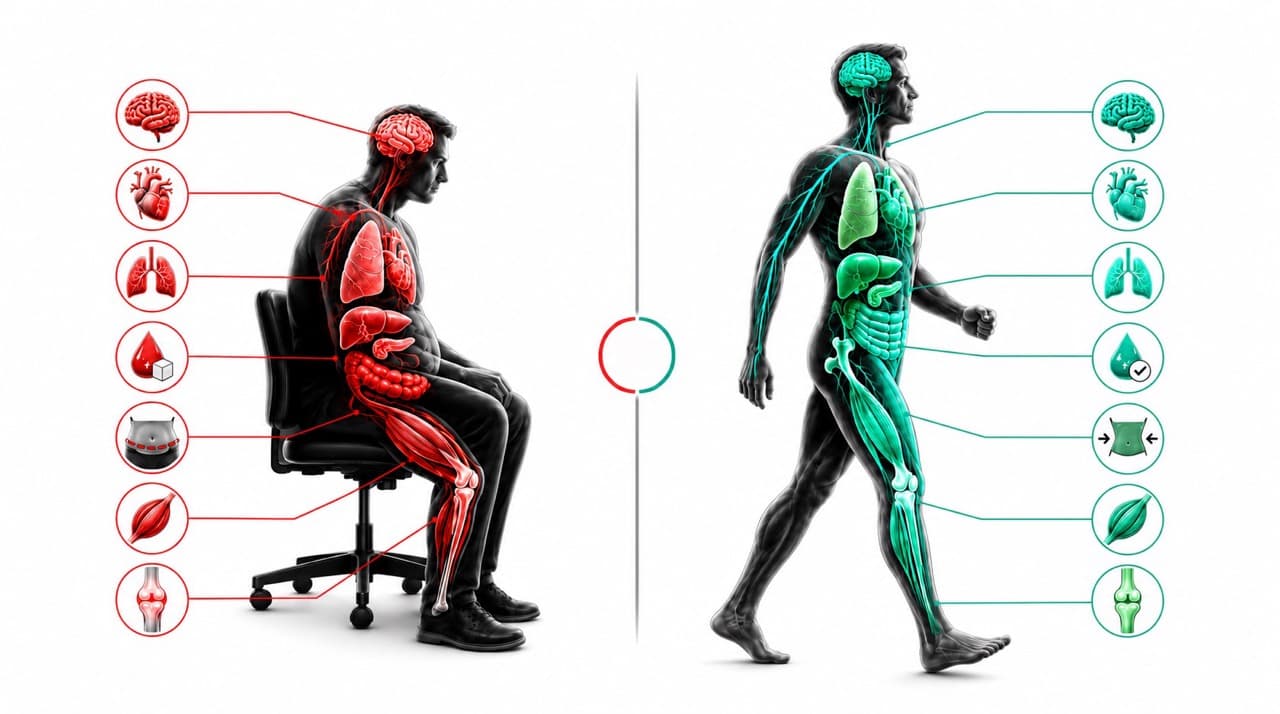
After two hours, blood begins pooling in the calves. After three hours, blood flow decreases further. After five to six hours, the blood vessels in your legs function noticeably worse. They dilate less well in response to increased blood flow, a condition researchers call endothelial dysfunction: the inner lining of your blood vessels is not working properly.
Vascular damage builds surprisingly fast
After five days of reduced activity (from an average of 12,000 to 3,500 steps per day), vascular function in the legs declined by 3 percent. At the same time, particles in the blood that signal damage to the vessel lining rose by nearly 490 percent.
A telling number: a 1 percentage point improvement in vascular function is associated with 17 percent fewer cardiovascular events in population research. Vascular function is therefore a serious indicator, and it responds quickly and strongly to how active you are.
Your blood pressure rises acutely during prolonged sitting
A large review study showed that uninterrupted sitting increased systolic blood pressure by an average of 3.2 mmHg. After two weeks of low activity, blood pressure in participants rose by 4 mmHg. That sounds small, but at the population level, increases of 1 to 10 mmHg are associated with more deaths from heart attacks and strokes.
Two weeks of sitting does what seven years of aging does
Fourteen days of greatly reduced step counts, from an average of 10,500 to 1,344 steps per day, resulted in a 6.6 percent drop in fitness (VO2max). VO2max is a measure of how much oxygen your body can process per minute at maximum effort. The higher, the fitter.
For comparison: normal aging reduces your fitness by around 10 percent per decade. Two weeks of sitting compressed an aging process of around seven years into fourteen days. The good news: once participants resumed normal activity, fitness was fully back to its previous level within two weeks.
Interrupting sitting improves your blood vessels and blood pressure immediately
Short movement breaks reduced systolic blood pressure by an average of 4.4 mmHg and diastolic by 2.4 mmHg, compared to uninterrupted sitting. In people with high blood pressure and excess weight, the drops were three to five times larger: 10 to 13 mmHg. Those with already elevated blood pressure have the most to gain.
Short-term studies of 8 to 16 weeks showed an improvement in vascular function of an average of 0.93 percentage points. That is clinically meaningful: a 1 percent improvement is associated with 17 percent fewer cardiovascular events.
Even fidgeting with your legs helped. In one study it reduced the sitting-induced decline in blood flow in the back of the knee by 19 percent. Literally moving without standing up.
Frequently asked questions
How quickly does my fitness recover when I start moving more?
In the described studies, VO2max fully returned to baseline within two weeks of resuming normal activity. The body is responsive. But it also shows how quickly fitness declines with inactivity.
Is a standing desk enough to limit the damage?
Better than sitting, but less effective than moving. Standing slightly improves blood sugar and increases muscle activity somewhat. For blood pressure, vascular function and fitness, active movement breaks are more effective than standing alone.
Is lying down better than sitting?
No. Strict bed rest is actually worse for the cardiovascular system and metabolism, because the load on weight-bearing muscles disappears entirely and the distribution of blood and fluid in the body changes. Sitting is less extreme than lying down.
Do I have extra risk if I already have cardiovascular disease?
Yes, and the benefit of regular movement breaks is likely greater for you too. Observational research shows that sedentary behavior in people with existing cardiovascular conditions is more strongly associated with poor outcomes. Discuss with your healthcare provider what movement intensity is appropriate for you.
How long before vascular damage becomes visible from too little movement?
Effects on blood flow in the legs are measurable after just 30 minutes. Endothelial dysfunction occurs after two to five hours of uninterrupted sitting. Significant vascular function decline with reduced step counts is already visible after five days.
Bron
Pinto AJ, Bergouignan A, Dempsey PC, Roschel H, Owen N, Gualano B, Dunstan DW. Physiology of Sedentary Behavior. Physiol Rev. 2023;103(4):2561-2622. doi:10.1152/physrev.00022.2022.
START TRAINING SERIOUSLY
Discover new training methods based on scientific knowledge, improve your form and technique and seriously track your fitness goals.
Already a member? Get the app