BUT SERIOUSLY...
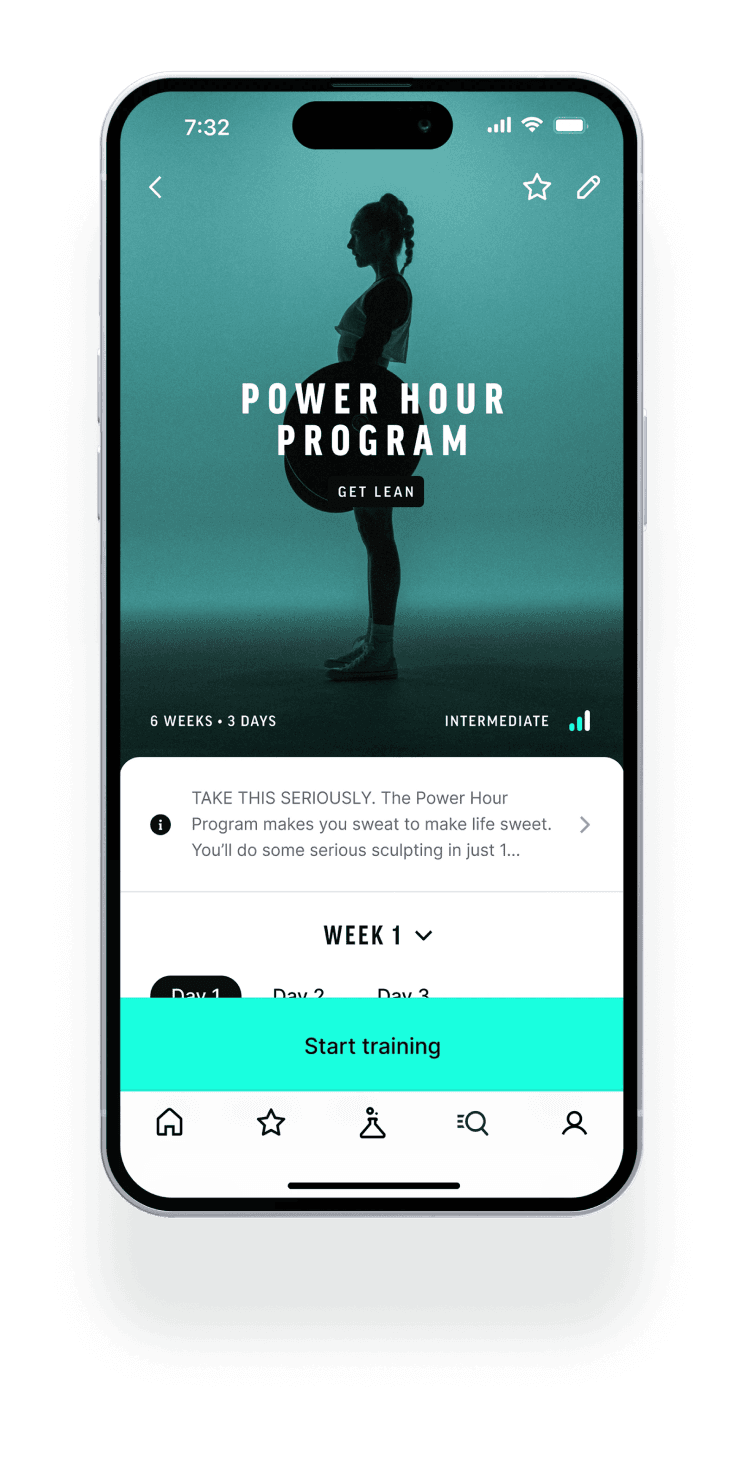
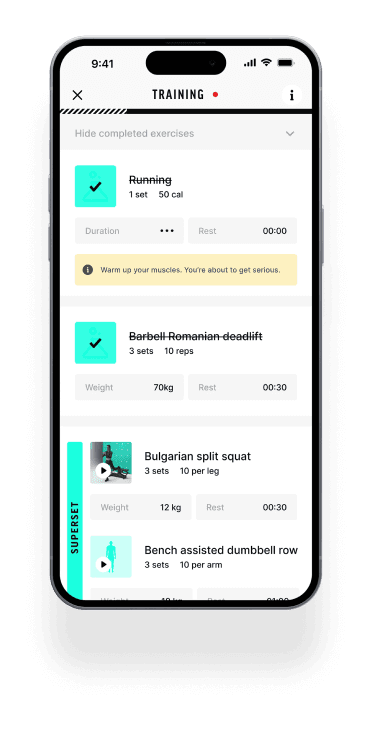
This schedule sums up all muscle groups. On 2 days the emphasis is on the lower body, on which you add at least 2 exercises for the upper body. The other 2 days the focus is full on the upper body with a seriously fun finisher on your last day of training. Count on your growth!
Workout plan highlights
Upper-lower split schemas may be the most written type of muscle building schemas. You can combine exercises wonderfully without them directly impacting your next training. Good luck!
Featured exercises
The upper lower schemes have a great balance between large compound exercises and isolation exercises. From the big classics to lesser-known exercises. All with just one goal: muscle building of all your muscle groups!
Dumbbell forward lunge
Een oefening voor je benen, billen, core en stabiliteit. Met andere woorden een echte allround oefening
- 1Step forward and lower your rear knee to the floor until you touch it gently, about right below your hip.
- 2The heel of your rear foot comes off the floor.
- 3Keep your upper body as stable as possible and your front foot completely on the floor.
- 4Then step forcefully to the starting position.
Bench Press
Bench press oftewel bankdrukken, wie kent deze super oefening niet. Volgens mij behoeft hij geen introductie en staat deze oefening bij iedereen in zijn top 5 oefeningen voor borst, schouders en triceps.
- 1Grab the bar around 1.5-2x wider than shoulder width.
- 2During the exercise, keep your wrists straight and your elbows under your hands.
- 3Lower the bar under control and touch it low on your chest.
- 4Then push the bar up forcefully and bring it back over your upper chest/shoulders.
Basic principles of your workout plan: Muscle Building
Your body won't change until you seriously challenge it. This workout schedule certainly does that, but only if you commit to it. All you need to do is commit to the following two things:
When doing the exercises that require you to choose a weight, make sure you have about 1-2 reps left in the tank, unless something else is indicated. This is a leading principle. If it says 10 reps, it means that you can physically do 11-12, but still stop at 10. However – are you at rep 10 and could do exactly 4 more reps if your life were at stake? Then do 12-13 reps that set. For the next set, adjust the weight. This way, each set remains effective.
As your muscle mass grows, you'll be able to lift more weight. In order to keep challenging your muscles, the goal throughout the schedule is to continue to (slightly) increase the weight of the exercises.
Just to eliminate any doubt; when doing exercises with your own body weight, just do the number of reps indicated. Do you see an 'infinity symbol'? Then that literally means as many reps as you can do.
How serious are you really?
Let’s be serious. Muscles don't grow without a strong nutrition plan. If you want to get seriously muscular, you will have to eat a little more than your body requires. Although there is no best ‘diet’ for everyone, the basics are usually the same:
Create a small calorie surplus (5-10% above maintenance). Keep in mind: even more calories than that doesn't always mean more muscle growth – but it does always mean more fat gain.
Try to consume about 1.6 to 2.2 grams of protein per kilogram of body weight each day. Spread this out across at least 4 meals.
Experiment with different ratios of fats (20-35% of total calories) and carbohydrates (remaining calories). The ratio doesn't need to be super accurate, it's okay if it varies daily.
Focus on natural nutrients rich in vitamins, minerals and fibre.
We know this is a toughie but, avoid high-calorie, ultra-processed foods whenever you can. These include candy, cookies, savoury snacks, chips, pizza, chocolate, pastries, sweet dairy drinks, sodas, and sweet breakfast cereals.
Drink plenty of water, black and green tea and reduce your coffee intake.
Make sure that you are able to stick to your diet!
For specific questions, or to create a personal nutrition plan, we always recommend that you contact a qualified (sports) dietitian. Never change your entire nutrition plan by yourself. Seriously.
DOWNLOAD THE APP AND PUT THIS WORKOUT PLAN TO THE TEST. SERIOUSLY.
START TRAINING SERIOUSLY
Discover new training methods based on scientific knowledge, improve your form and technique and seriously track your fitness goals.